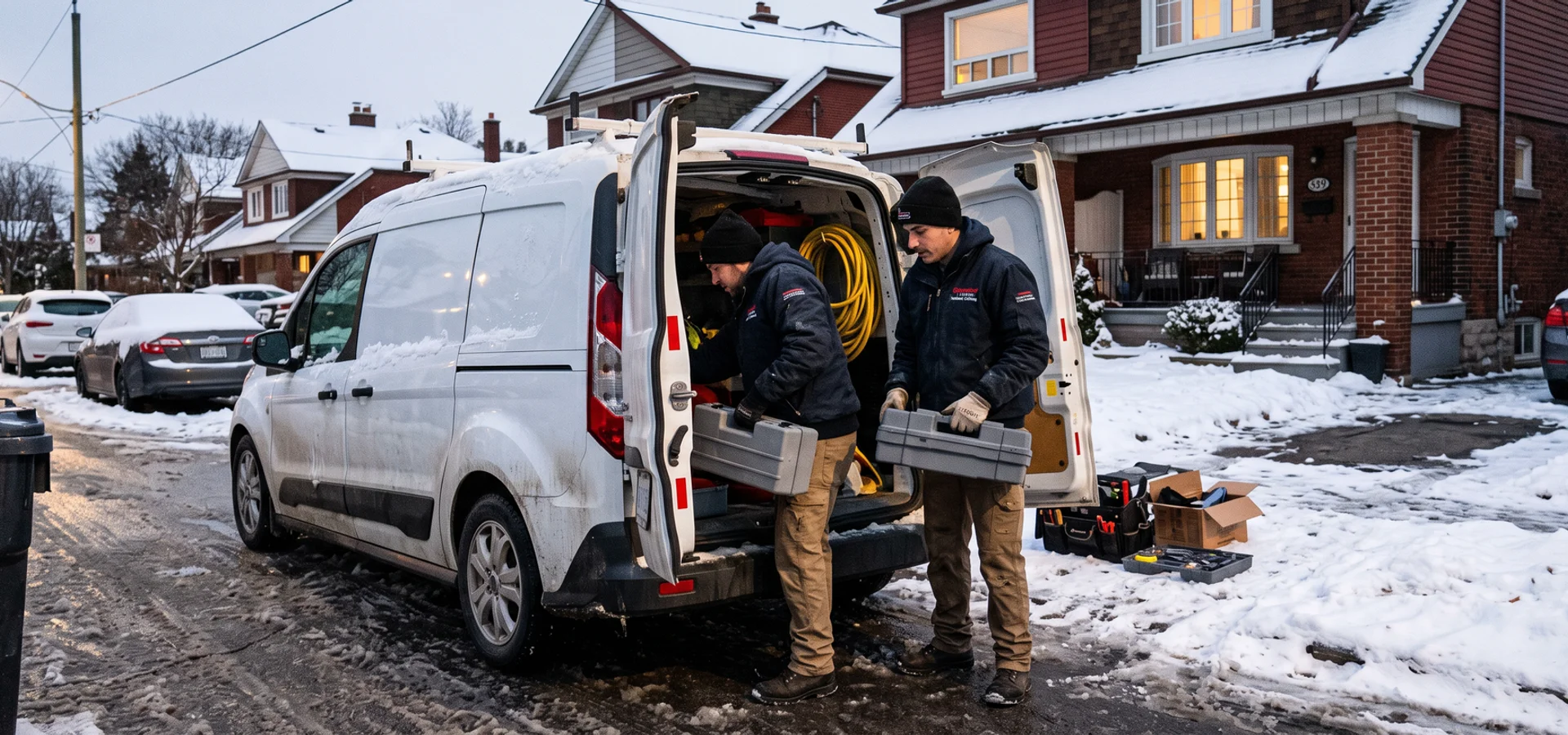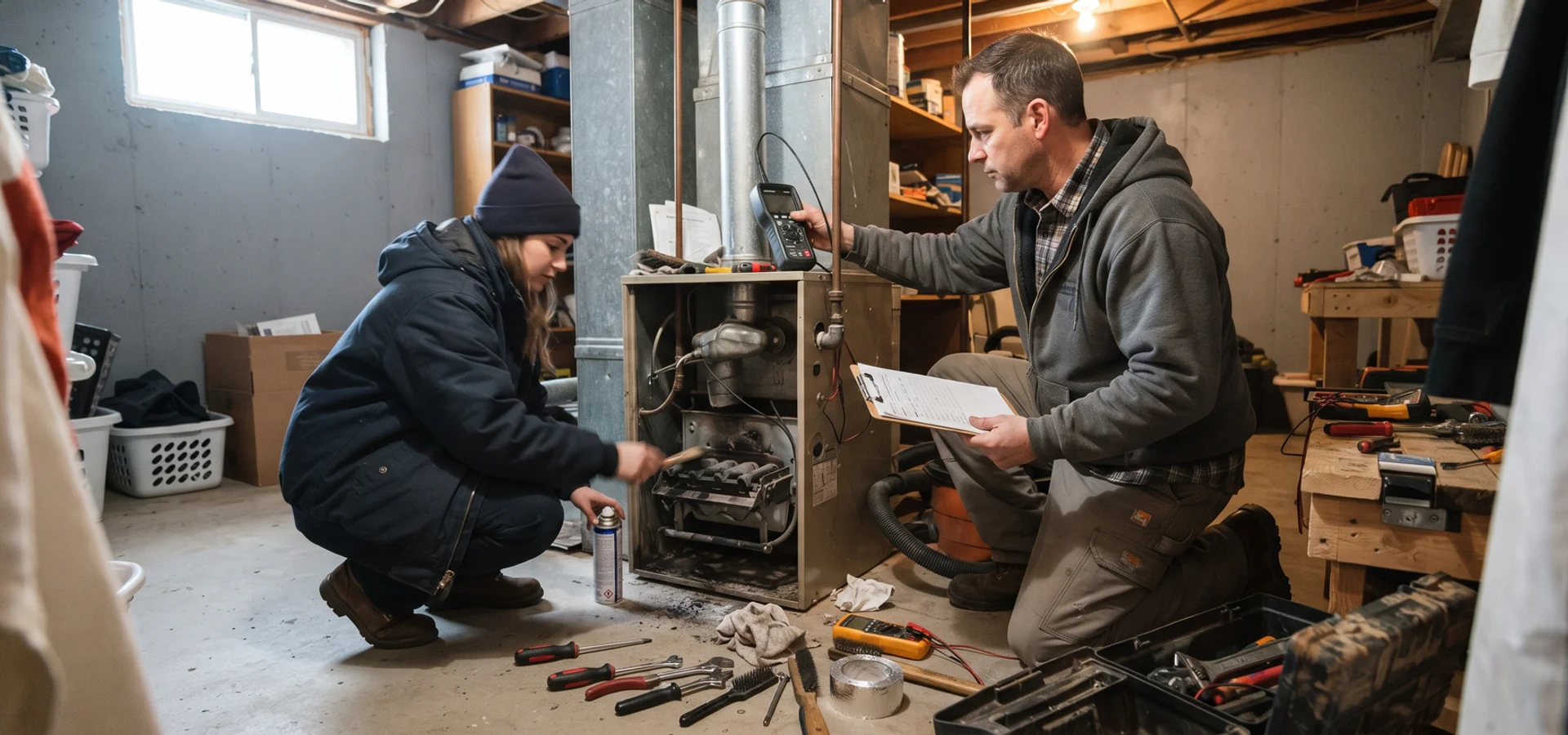
A furnace tune-up from Best Furnace Repair Toronto is a 12-point preventative inspection of a residential gas furnace, carried out across Toronto and the GTA by TSSA G1 or G2 licensed gas technicians under the CSA B149.1 natural gas code. The crew brings 20+ years of Toronto furnace service to every visit, and the tune-up costs $149 to $249 CAD.
Heating accounts for roughly 60% of the energy used in a typical Canadian home, and a Toronto furnace carries that load from November through March. The first freezing morning of the season is when a neglected unit is most likely to quit.
Every visit checks the heat exchanger, ignition system, blower motor, flame sensor, gas valve, and filter. The technician runs a full combustion analysis and records the carbon monoxide reading to confirm the furnace burns and vents safely.
Every inspection ends with a written record that satisfies Ontario home insurance conditions and manufacturer warranties. The sections below cover what the checklist includes, why the timing matters in Toronto, and how the price is set.
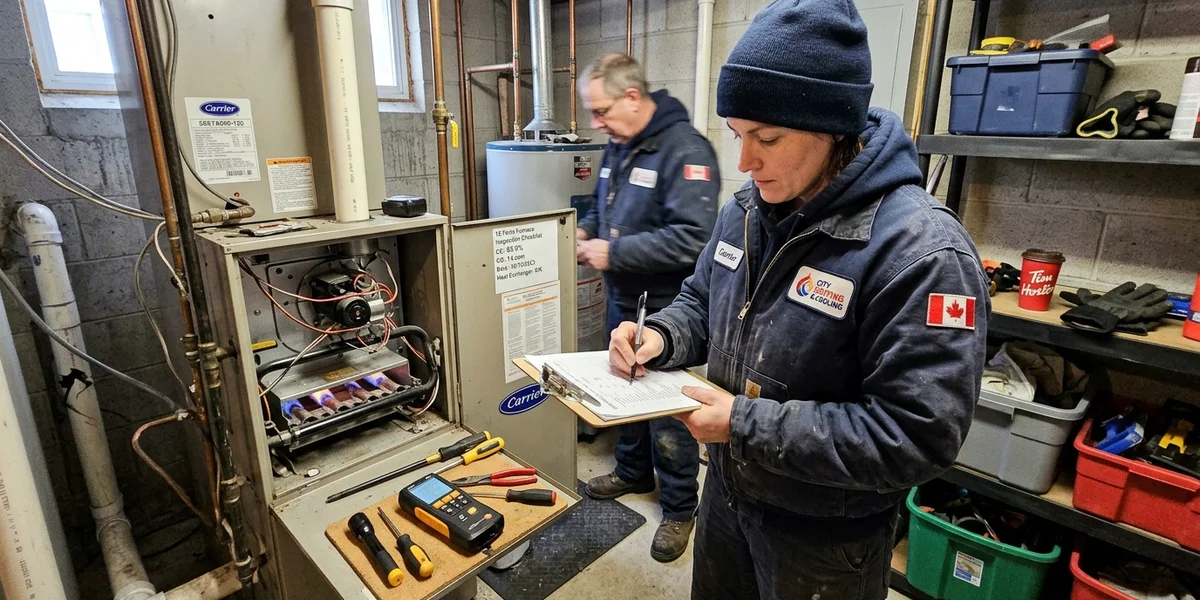
The 12-Point Annual Furnace Tune-Up Checklist
Annual maintenance is the key to preserving your equipment’s Annual Fuel Utilization Efficiency (AFUE) rating. A neglected furnace loses efficiency as burners foul, filters load up, and the flame sensor oxidizes.
The checklist is split into three categories so nothing gets missed. It applies to an 80% AFUE mid-efficiency unit and a 95% AFUE condensing furnace alike, and the crew is manufacturer certified for Lennox, Carrier, Trane, Goodman, Napoleon, York, Rheem, and Bryant equipment.
Safety and Combustion Checks
Safety always comes first when dealing with natural gas. These steps verify that your system vents exhaust properly and burns fuel cleanly.
- Heat exchanger inspection, visual and camera where access allows, looking for cracks and corrosion.
- Combustion analysis with efficiency and carbon monoxide readings recorded.
- Flue draft and venting condition, including condensate path on condensing units.
- Burner cleaning and flame pattern assessment, checking for lifting, yellow tipping, or sooting.
Mechanical and Electrical Systems
Your furnace contains moving parts and sensitive electronics that degrade over time. A dirty flame sensor is a leading cause of sudden shutdowns.
- Flame sensor cleaning and flame rectification current measured in microamps.
- Ignition system check, hot surface ignitor resistance or pilot and thermocouple output.
- Gas valve and manifold pressure verified on a digital manometer across stages.
- Safety switch testing, roll-out, high-limit, and differential pressure switch.
Airflow and Performance Testing
Proper airflow distributes heat evenly and prevents the system from overheating. A heavily clogged filter forces the blower motor to work much harder.
- Blower motor, wheel, and run capacitor, including amp draw against nameplate.
- Filter assessment and airflow, with static duct pressure where a restriction is suspected.
- Thermostat calibration and a full heating cycle test including staging.
- Temperature rise measured against the manufacturer’s specified range.
Why Toronto Furnaces Fail on the First Cold Snap
Toronto furnaces run hard from November through March, and the failure pattern here is seasonal rather than random. It holds whether the furnace sits in the basement of a post-war bungalow in Scarborough, a semi-detached house in Leaside, or the utility closet of a North York townhouse.
The first sustained freeze produces the largest single spike in no-heat calls of the entire year. Components that were marginally okay in October finally give up when the furnace starts running long cycles every single night.
Most emergency winter breakdowns we see trace back to a fault that a routine tune-up would have caught months earlier.
A sudden drop to -15°C in February or March puts immense stress on a system that has already been working for four months straight.
An early-autumn tune-up from Best Furnace Repair Toronto catches exactly those failing components before they strand you in the cold. A flame sensor coated in oxide or a run capacitor down on microfarads will trigger a shutdown. An ignitor drifting out of specification or a half-blocked pressure switch port requires immediate attention.
Addressing these specific issues is inexpensive in September. Fixing them at 11 p.m. in January at the after-hours diagnostic rate is very costly.
Will Skipping a Tune-Up Affect Your Insurance or Warranty?
Two vital documents depend entirely on your tune-up record. Most Ontario home insurance policies contain strict maintenance conditions for heating equipment.
Major insurers like Aviva and Intact have specific heating season rules for policyholders. If you leave your property for an extended period, they require you to maintain and monitor the indoor temperature to prevent burst pipes.
Most manufacturer warranties also require documented annual service by a licensed professional to remain valid. Without a proper record, an insurer can refuse a water damage claim or a manufacturer can deny a warranty part.
Every tune-up ends with an inspection record that protects your coverage. The document includes:
- The exact date of service and the technician’s TSSA certificate number.
- A detailed checklist of every mechanical and safety test completed.
- The measured combustion efficiency and carbon monoxide readings.
This paperwork is exactly what both insurers and manufacturers ask to see when validating your coverage.
What Changes the Price of a Tune-Up?
The 12-point inspection costs between $149 and $249 CAD (2026 pricing), whether the house is in Etobicoke, Scarborough, or downtown Toronto.
Where your total lands in that range depends entirely on the equipment type. A single-stage furnace in an accessible basement sits at the low end of the scale. A two-stage or modulating unit with heavy burner fouling simply takes longer to service.
If the tune-up uncovers a fault, the repair is quoted separately based on published service bands. You are never charged a second diagnostic fee for a fault found during the tune-up.
Here is a clear breakdown of typical repair estimates if we find an issue:
| Service or Component | Estimated Cost (CAD) |
|---|---|
| 12-Point Preventative Inspection | $149 - $249 |
| Thermocouple or Flame Sensor | $150 - $450 |
| Capacitor Replacement | $150 - $450 |
| Ignitor or Ignition Control Module | $300 - $650 |
| Blower Motor Replacement | $450 - $950 |
For recurring service with documented records and landlord certification, see annual furnace maintenance.
If the tune-up finds a fault that needs fixing now, our gas furnace repair guide covers the complete repair scope.
The full set of published scope bands is available on the furnace repair Toronto homepage.
How Our Tune-Ups Compare
| Feature | Typical Provider | Best Furnace Repair Toronto |
|---|---|---|
| Technician licensing | Licence not always shown on paperwork | TSSA G1 or G2, certificate number on the record |
| Price | Quoted on the phone or after the visit | $149 to $249 CAD, published on this page |
| Combustion and CO | Visual check only | Combustion efficiency and CO measured and written down |
| Fault found during the visit | Separate diagnostic fee | No second diagnostic fee, written CAD repair quote |
| Paperwork | Sticker on the side of the unit | Dated 12-point record for insurer and manufacturer |
Tune-up slots fill quickly once the first frost is in the forecast. Book in September or October by calling (647) 360-9992 or sending a message, and the visit is scheduled ahead of the cold-snap emergency queue.