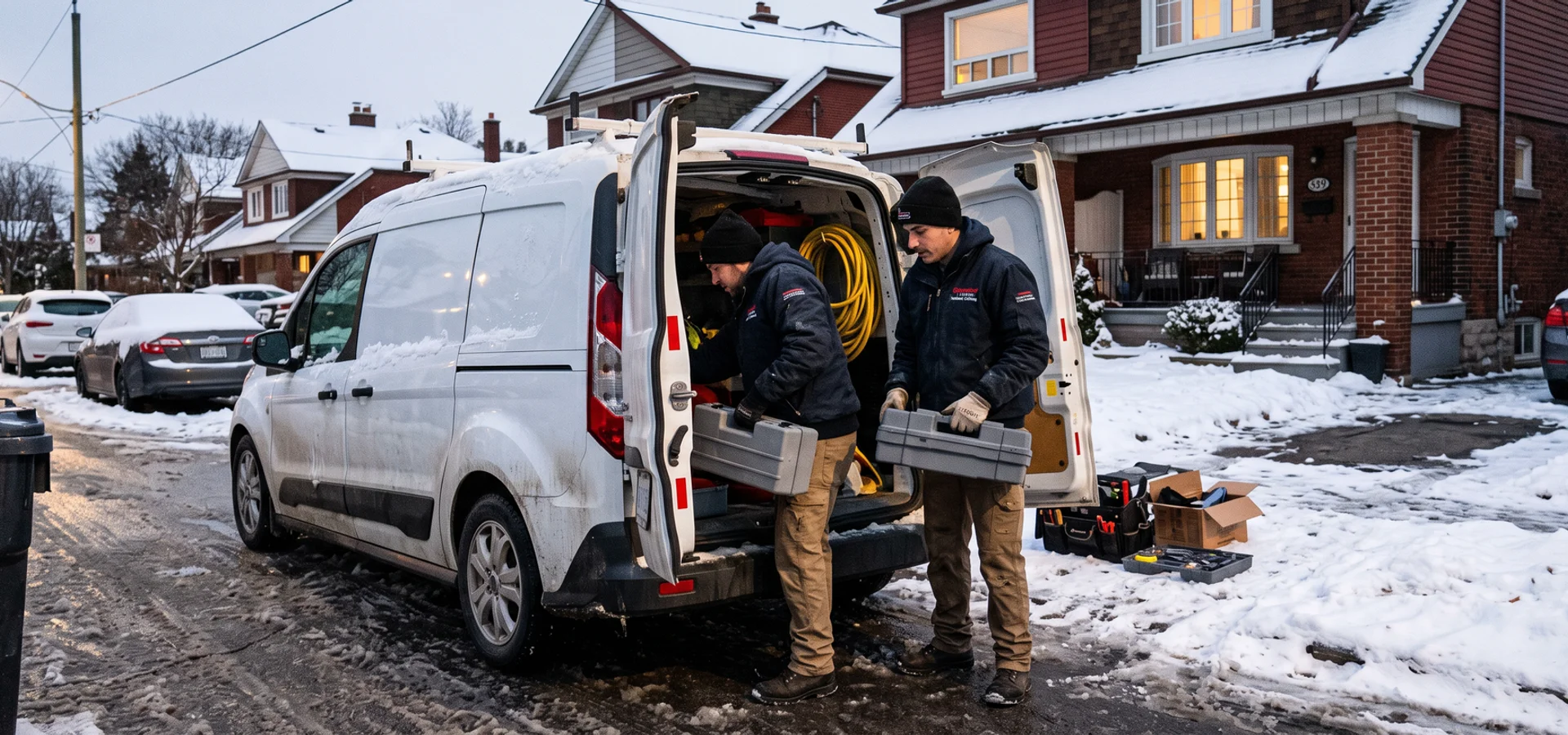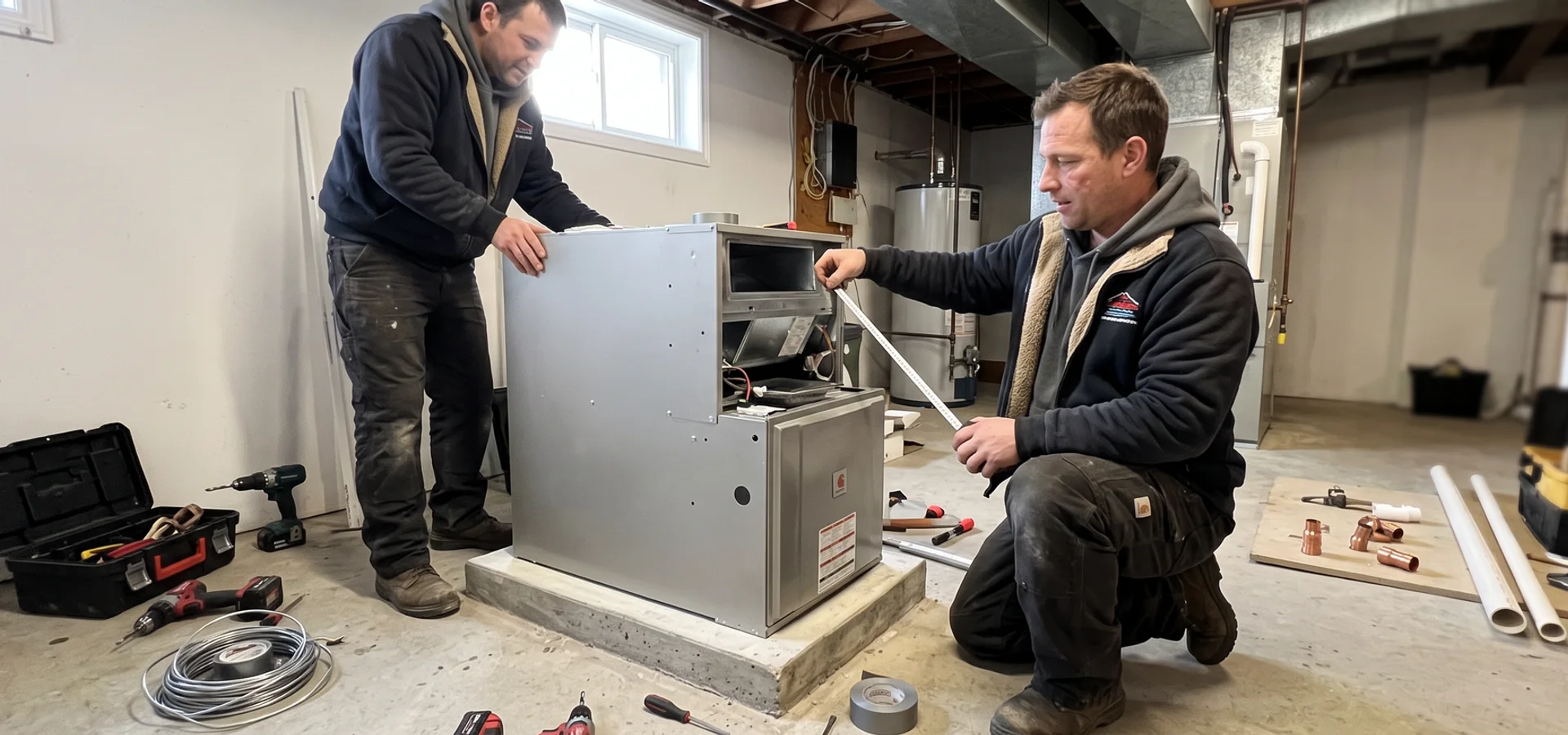
Furnace installation is the sizing, setting, venting, gas piping, electrical hookup, and commissioning of a new furnace in a home where no comparable unit is simply being swapped out. Best Furnace Repair Toronto has done this work across Toronto and the GTA for 20+ years, with TSSA G1 and G2 licensed gas technicians, a Manual J heat-loss calculation on every job, and installed pricing published at $3,500 to $8,500 CAD.
Most installs start with one of a few situations: a basement finish in Leaside that moves the mechanical room, a secondary suite in a North York bungalow that needs its own heat, an addition or custom build in Etobicoke, or a semi-detached house in Leslieville coming off electric baseboards.
The sections below cover how each job is sized, which equipment choices change comfort and running costs, and what drives the installed price.
What Does a Code-Compliant New Furnace Install Include?
A legal install in Toronto goes well beyond setting a metal cabinet in the basement.
Every job is completed to the B149.1 Natural Gas and Propane Installation Code as adopted in Ontario by TSSA. The gas work is done by a TSSA G1 or G2 technician, and the furnace is sized, mounted, vented, and wired to Ontario Building Code Part 6.
Canada’s federal energy efficiency regulations set a 95% AFUE minimum for new residential gas furnaces.
- Federal efficiency standard: At 95% AFUE, about 95 cents of every dollar of natural gas you buy from Enbridge Gas becomes heat in the house.
- Municipal approvals: The permit is filed with the correct municipality, whether that is the City of Toronto, Vaughan, or Mississauga, and the work meets Ontario Building Code Part 6.
- CO alarms: The Ontario Fire Code requires a working carbon monoxide alarm next to every sleeping area in a home with a fuel-burning appliance.
We check those alarms during commissioning. Every job finishes with a combustion analysis, a CO verification check, and a static duct pressure reading, all recorded on the service file.
Installed cost runs $3,500 to $8,500 CAD (2026 pricing), depending on the efficiency of the unit, the venting run, and access to the mechanical room.
5 Things That Decide Whether a New Furnace Performs
The most expensive equipment on the market still performs only as well as it is installed.
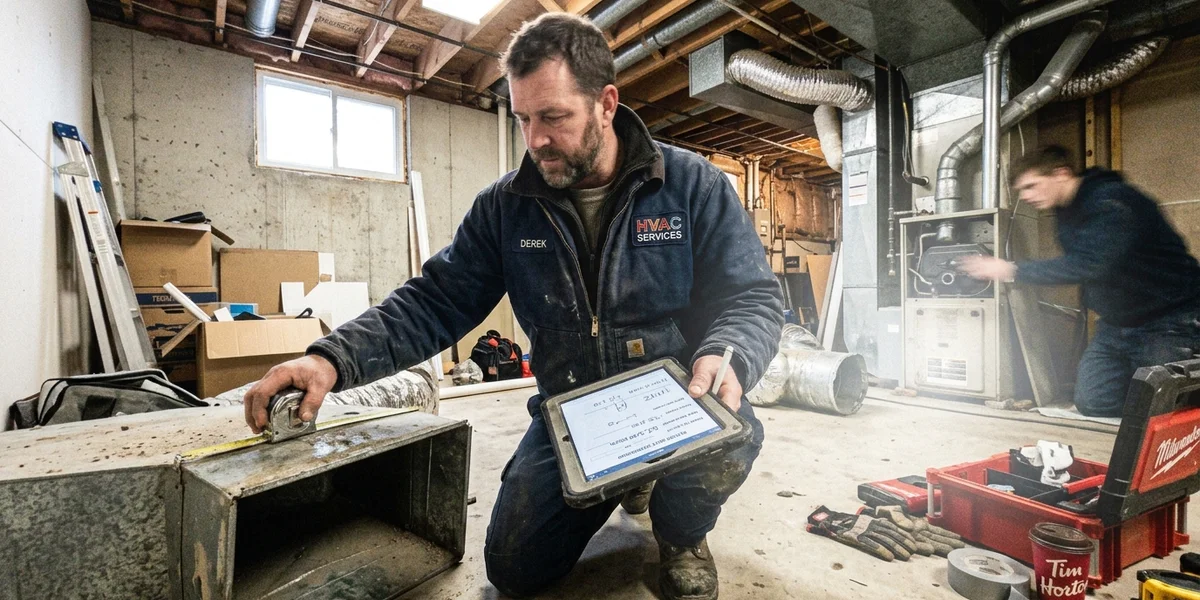
The same costly mistakes show up again and again when planning steps are skipped. These are the five details that decide whether a new furnace heats evenly and lasts:
- Heat-loss sizing. The BTU rating must come from a Manual J calculation. Oversizing causes short cycling, uneven floor temperatures, and early wear on ignition parts.
- Return air capacity. Older Toronto homes, especially pre-war detached and semi-detached houses in East York and along the Danforth, routinely have undersized return vents. High static pressure kills a blower motor and starves the airflow, regardless of the unit’s brand.
- Venting path. A condensing unit requires ULC S636 certified venting with the correct slope and support. PVC pipe handles exhaust temperatures up to 65°C, while CPVC is required for hotter exhaust up to 90°C. Mixing pipe or cement brands violates code and voids the warranty.
- Gas line capacity. The existing pipe from the Enbridge Gas meter must supply the new unit’s input rating at the required pressure, even with the water heater, range, and every other gas appliance in the house running.
- Commissioning. An untested furnace is an unknown. Manifold pressure, temperature rise, combustion efficiency, and CO levels are all measured and recorded before the crew leaves.
Which Burner and Blower Options Are Worth Paying For?
Two parts inside the cabinet affect comfort and running costs more than anything else: the burner and the blower motor.
We install Lennox, Carrier, Trane, Goodman, Napoleon, York, Rheem, and Bryant furnaces, and the choice between single-stage, two-stage, and modulating models matters more than the brand.
Single-Stage and Two-Stage Options
Single-stage models run at one constant output, which makes them the most affordable option.
They are a reasonable choice for a small, tightly insulated house or a newer condo townhouse. Two-stage units are the better fit for most family homes.
They run at roughly 65 percent capacity most of the time and only move to full output during severe cold snaps. Longer, gentler heating cycles even out the temperature between floors, which solves the cold-basement and hot-upstairs complaints common in larger two-storey homes in Vaughan, Richmond Hill, and Brampton.
Modulating Burners and ECM Blower Motors
Modulating models use a gas valve that adjusts flame output continuously. They deliver the tightest temperature control and the quietest operation, and they carry the highest upfront price.
The blower motor is the other half of the comfort equation.
A variable-speed Electronically Commutated Motor (ECM) uses brushless DC technology to hold steady airflow even as the air filter loads up with dust. An ECM uses around 400 kWh per year compared to the 1,000 kWh used by an older permanent split capacitor (PSC) motor. That saves $80 or more a year on a Toronto Hydro or Alectra bill, especially if you run the fan continuously for better air filtration.
What Changes the Installed Price of a New Furnace in the GTA?
At 2026 rates, a new furnace installed in the Greater Toronto Area runs $3,500 to $5,500 CAD for an 80% AFUE mid-efficiency unit and $5,500 to $8,500 CAD for a 95% AFUE high-efficiency unit. Every quote itemises parts, labour, and disposal separately.
The final number depends on the unit you select, the length of the new venting run, and physical access to the mechanical room. A straight install in a wide-open suburban basement in Maple sits at the lower end of that range. A condensing install in a narrow heritage semi with a long, complicated vent run sits at the higher end.
Common extra costs:
- Labour: About 25 to 35 percent of the total bill, usually around $1,200 to $1,500, covers the work of the licensed installation crew.
- Duct sealing and inspection: Quoted separately at $299 to $899 CAD if the existing sheet metal is leaky.
- Smart thermostats: Installation runs $199 to $549 CAD for homes that need new staging wires or a dedicated C-wire.
How Our Furnace Installs Compare
The differences that matter on a new furnace show up in the paperwork and the test readings, not the brochure.
| What you get on a new furnace install | Typical provider | Best Furnace Repair Toronto |
|---|---|---|
| Sizing | Square-footage rule of thumb | Manual J heat-loss calculation cross-checked against duct capacity and static pressure |
| Licensing | Not always shown on paperwork | TSSA G1/G2 certificate numbers printed on every invoice |
| Permit | Left to the homeowner | Municipal permit filed for your address before install day |
| Venting | Mixed pipe and cement brands | ULC S636 venting from a single system, sloped and supported to code |
| Commissioning | One test start | Combustion analysis, CO reading, temperature rise, static pressure, and a full staging cycle recorded |
| Price | Quoted only after a site visit | $3,500 to $8,500 CAD installed, published on this page |
New Installation or Replacement: Which One Do You Need?
Putting in a brand-new system is a different job from swapping out an old one.
We use the term installation for a blank slate: new custom builds, home additions, basement finishing projects that relocate the mechanical room, secondary suites, or a first-time move off electric baseboards. With no existing unit to use as a baseline, the heat-loss calculation carries the entire weight of the sizing decision.
If you need to swap an aging furnace for a similar model, see furnace replacement. If the main goal is better efficiency and Enbridge rebate eligibility, see high-efficiency furnace conversion. For every service band and published price, see our main page for furnace repair Toronto.
Installs are booked across Toronto, North York, Scarborough, Etobicoke, and the rest of the GTA, usually within 3 to 5 business days of the site assessment.