What Does a Furnace Ignition Repair Fix?
Furnace ignition repair is the diagnosis and repair of the parts that light the burners on a gas furnace and prove the flame is there: the hot surface ignitor, direct spark electrode, standing pilot assembly, flame sensor rod, thermocouple, and ignition control module. Best Furnace Repair Toronto has carried out this work across Toronto and the GTA for 20+ years, with TSSA G1 and G2 licensed gas technicians working to the B149.1 code as adopted in Ontario.
Ignition failure is the most common reason a furnace will not start on the first cold snap of the season. With overnight lows in Toronto regularly sitting between -5 and -10 Celsius through January, a furnace that clicks, glows, and never lights turns into a cold house within hours. That holds whether the unit is an older mid-efficiency furnace in an East York bungalow or a 95% AFUE condensing furnace in a newer Vaughan townhouse.
Every ignition call starts with the same question: is the part that failed the actual fault, or a symptom of something upstream? Our technicians measure before they replace, and every step is carried out under Ontario’s gas code.
Hot surface ignitor replacement runs $300 to $650 CAD, flame sensor work runs $150 to $450 CAD, and pilot and thermocouple work runs $250 to $550 CAD (2026 pricing). The diagnostic is $99 to $149 CAD and is waived when the repair is authorised on the same visit.
Hot Surface, Spark or Pilot: 3 Ignition Types and How Each Fails
Hot Surface Ignition (HSI)
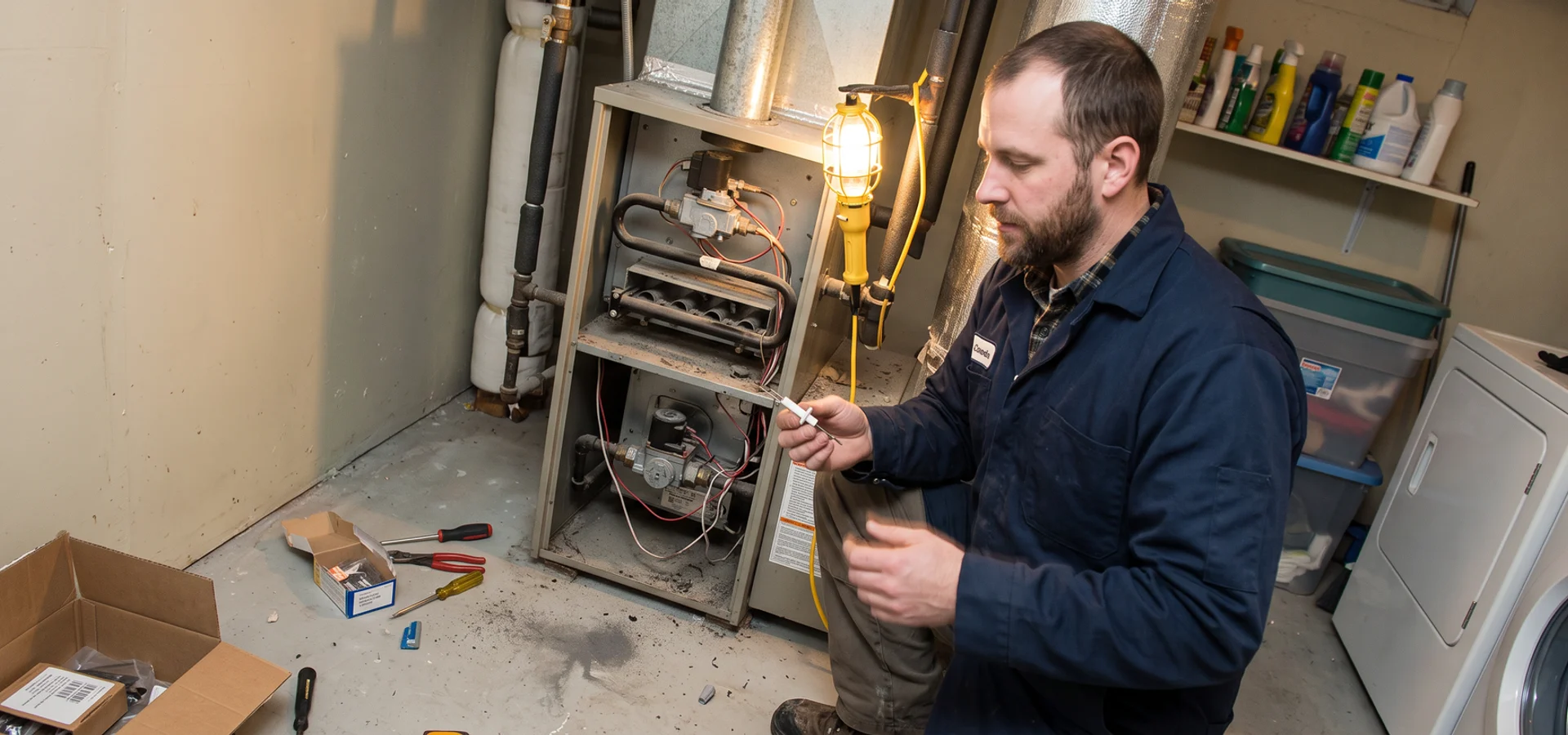
Most furnaces installed in the GTA since the 1990s, including most Lennox, Carrier, Goodman, and Trane units, use a hot surface ignitor made of silicon nitride or carborundum. The element glows red hot to light the burners and degrades with every heat cycle. Failure usually shows up as a hairline crack from thermal stress.
Our technicians confirm a failed HSI with an out-of-range resistance reading in ohms on a multimeter. Typical service life for this part is 4 to 7 years. Never touch a new carborundum ignitor with bare hands. The natural oils from your skin create hot spots on the element, which cause it to burn out and fail almost immediately.
Direct Spark Ignition
Direct spark setups use a high-voltage electrode that arcs to light the burner directly. Failures here come from electrode erosion, cracked ceramic insulators, or an incorrect spark gap. The gap between the sparking tip and the ground is usually around 1/8 inch, and even a small misalignment prevents ignition.
The diagnostic also tests the spark generator on the main control board. A faulty board will fail to send the necessary voltage to the electrode.
Standing Pilot
Standing pilots are an older arrangement where a small flame burns continuously. They disappeared from new furnaces decades ago, but they are still common in older Toronto housing stock, from detached and semi-detached houses in Riverdale and the Danforth to post-war bungalows in Scarborough. A thermocouple sits directly in the flame and generates a small electrical current measured in millivolts.
A healthy thermocouple generates about 30 millivolts. The gas valve closes safely if that output drops below 15 millivolts due to a drafty pilot, a misaligned orifice, or a worn-out thermocouple. A dirty pilot orifice blocks the gas flow, which starves the small holding flame.
5 Signs Your Furnace Will Not Light, and What Each One Means
Here are the five most common warning signs and the typical underlying causes.
- Clicks or glows, never lights. The ignitor is the first suspect, but we also check whether the gas valve is opening and whether a pressure switch upstream is failing to close.
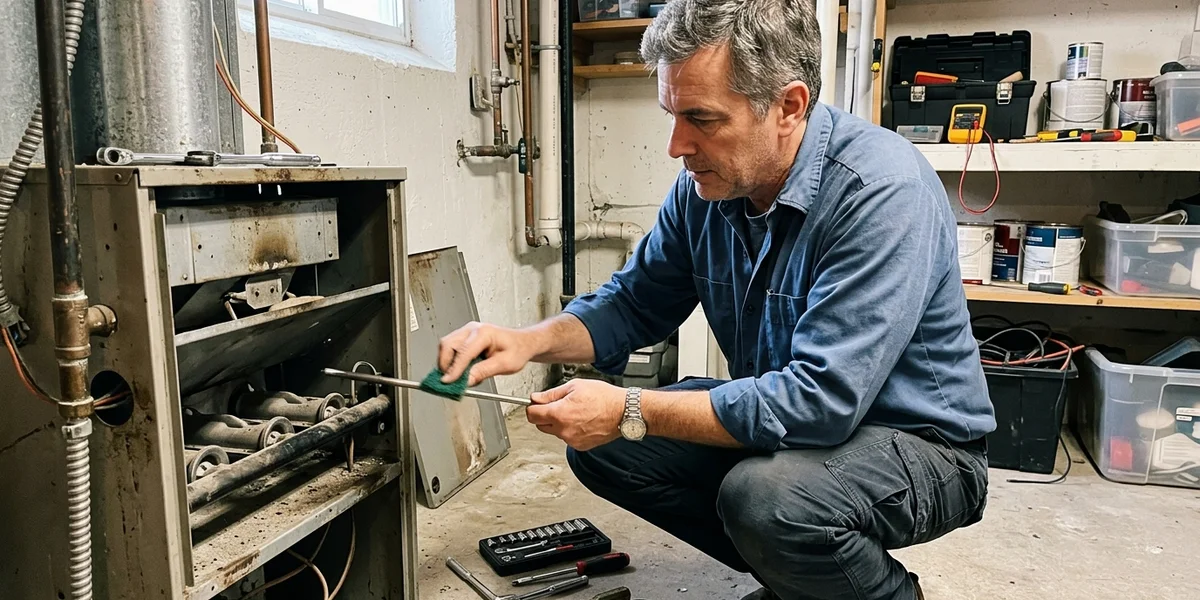
- Lights then shuts down within seconds. This indicates a flame rectification failure. The most frequent fix is cleaning a dirty flame sensor rod, though it can also be a grounding fault. Pro tip: never clean a flame sensor with coarse sandpaper. Sandpaper leaves silica grit in the metal grooves, which acts as an insulator and ruins the rod. Use 0000 steel wool or a soft Scotch-Brite pad instead.
- Three attempts then stops entirely. Your furnace has gone into a hard ignition lockout. The control board has done its job to protect the system. A lockout can point to a blocked vent, a failing gas valve, or a flame sensing fault, so book a diagnostic. Repeatedly cutting the power to reset the board is the wrong response and can be dangerous.
- A bang on ignition. This means delayed ignition, where gas accumulates in the chamber before finally lighting. Each delayed light puts a pressure spike on the heat exchanger, and a cracked heat exchanger is a carbon monoxide risk. Shut the furnace off and have it checked promptly.
- Pilot will not stay lit. The thermocouple output has likely dropped below what the gas valve needs to stay open. We also check that the pilot flame cleanly envelops the thermocouple tip.
What Ignitor and Flame Sensor Repairs Cost in the GTA
These are the published 2026 CAD ranges for ignition work in Toronto, North York, Etobicoke, and the rest of the GTA. The same ranges apply on every quote, and each invoice itemises the diagnostic fee, parts, and labour separately.
| Work | CAD range |
|---|---|
| Diagnostic (waived on same-visit repair) | $99 to $149 |
| Flame sensor cleaning or replacement | $150 to $450 |
| Hot surface ignitor replacement | $300 to $650 |
| Pilot assembly and thermocouple | $250 to $550 |
| Ignition control module | $300 to $650 |
Ignition parts are inexpensive relative to the rest of the furnace. We prioritize an accurate diagnosis over a fast one for exactly this reason. Replacing an ignitor when the actual fault is a dirty flame sensor leaves you with the same no-heat call a week later. Measuring ignitor resistance and flame current before quoting is how the right component gets fixed the first time, and it saves you an after-hours diagnostic of $199 to $299 CAD on a repeat call.
Why Does a New Ignitor Fail Within a Year?
A repeat ignition failure inside twelve months is a warning signal, not bad luck. We always dig deeper when a new part fails prematurely. The Technical Standards and Safety Authority (TSSA) notes that poor maintenance is a major contributing factor to fuel-related risks in Ontario homes.
Our technicians look for several specific underlying issues before fitting a second replacement part:
- Excessive short cycling that thermally hammers the ignitor.
- Incorrect manifold pressure on the gas valve.
- A failing relay on the main control board.
- A flame sensing problem that traps the board in a permanent retry loop.
We test the gas valve output with a digital manometer, confirming the standard 3.5 inches of water column for the natural gas Enbridge Gas supplies to Toronto homes. This extra step prevents you from paying an annual ignitor bill on a furnace that actually has a different problem.
How Our Ignition Repairs Compare
The difference on an ignition call is mostly in what gets measured before a part is fitted, and what gets verified after.
| What you get on an ignition repair | Typical provider | Best Furnace Repair Toronto |
|---|---|---|
| Diagnostic fee | Charged on top of the repair | $99 to $149 CAD, waived when the repair is authorised on the same visit |
| Diagnosis | Ignitor swapped on a guess | Ignitor resistance in ohms and flame current in microamps measured before a part is quoted |
| Licensing | Not always shown on paperwork | TSSA G1/G2 certificate numbers printed on every invoice |
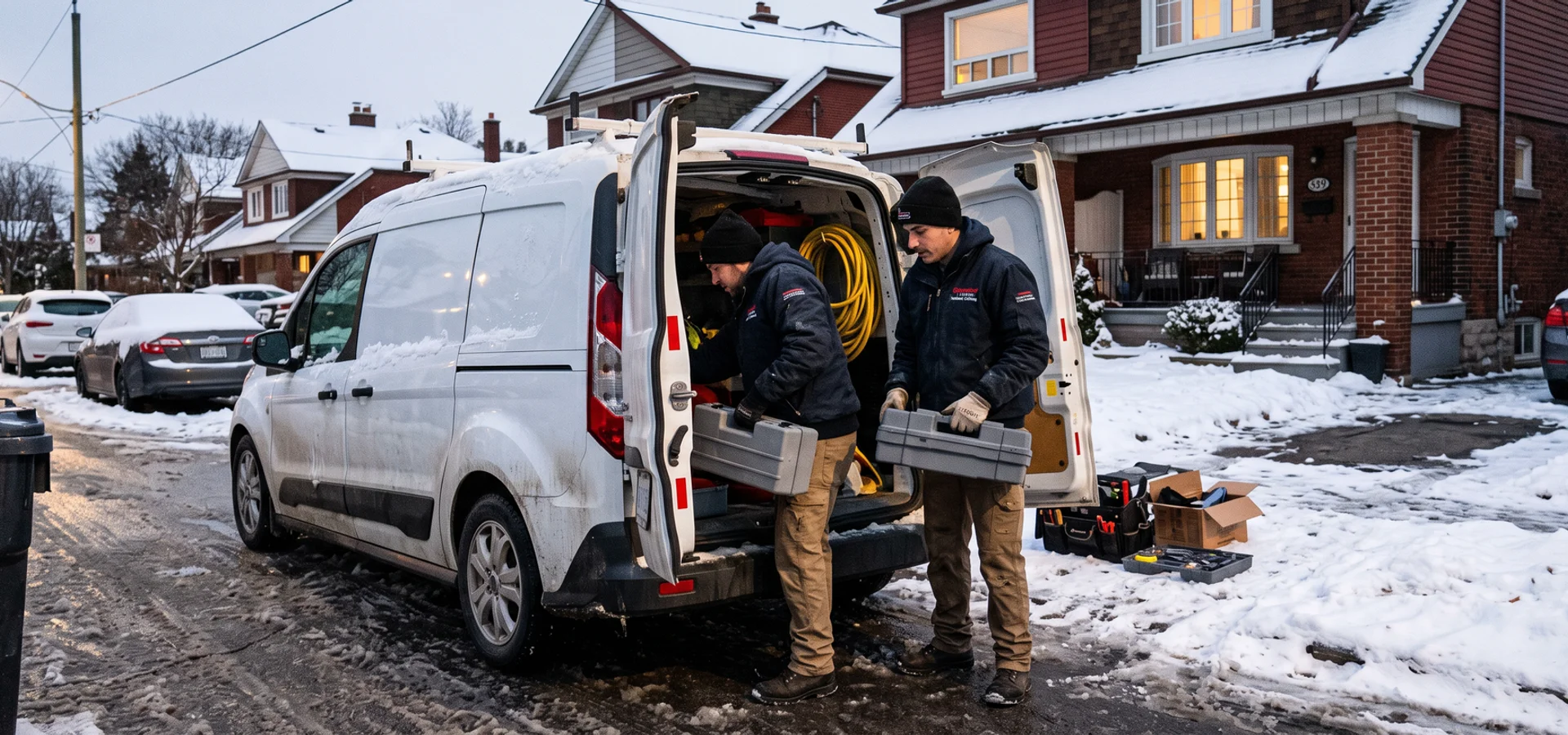
| Parts | Ordered after the first visit | Silicon nitride and carborundum ignitors, flame sensors, and thermocouples carried on the van |
| Verification | One test start | Several full ignition cycles, lockout behaviour checked, combustion analysis and CO reading recorded |
| Price | Quoted only after the visit | Every ignition repair range published in CAD on this page |
For the wider diagnostic across the gas train and controls, see gas furnace repair.
If the furnace is off right now in freezing weather, emergency furnace repair covers same-day dispatch, with cold-snap no-heat calls prioritised within 4 hours across Toronto, North York, Scarborough, Etobicoke, and the wider GTA.
The full set of published CAD scope bands is always available on the furnace repair Toronto homepage.